The universe keeps receipts.
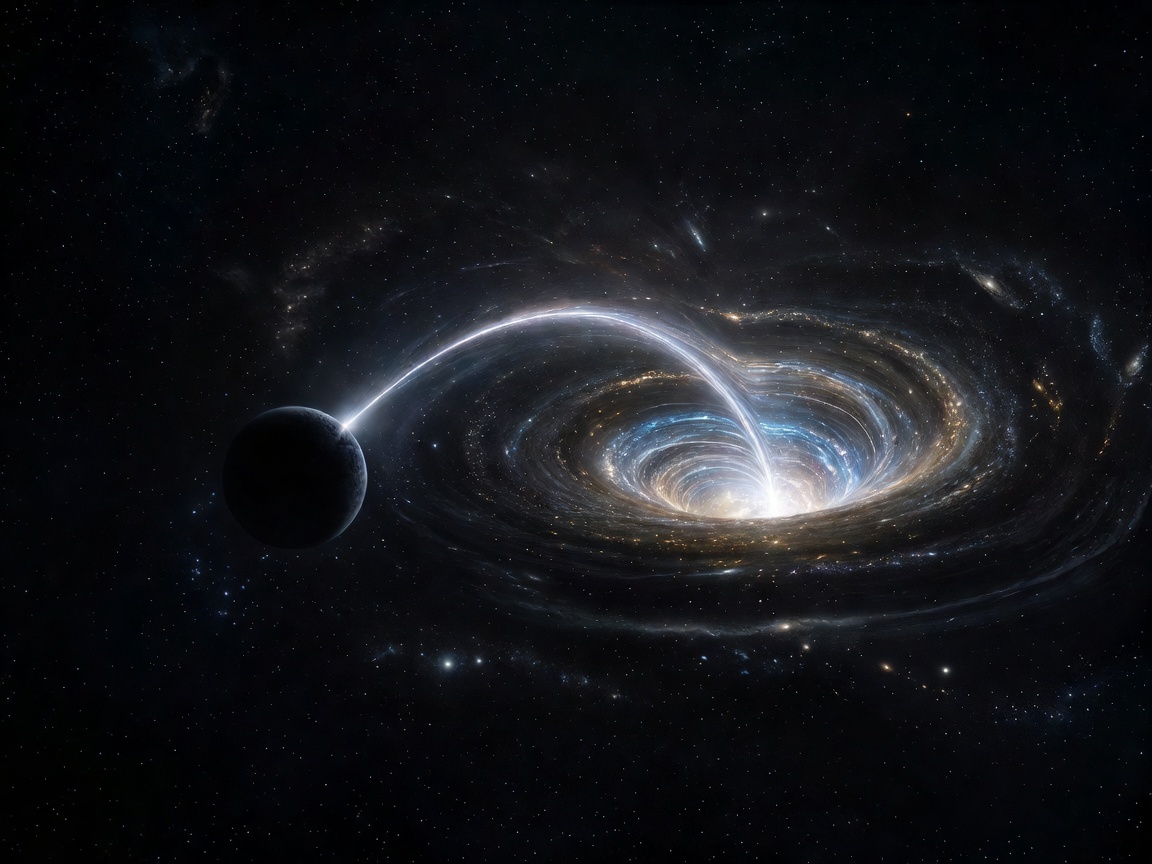
Physics in fiction is less about displaying equations than preserving relationships. Mass changes motion. Gravity changes clocks. Heat must go somewhere. When a story keeps those relationships intact, even a speculative premise gains weight.
How does relativity shape a story?
Interstellar uses gravitational time dilation as an emotional and structural device. Time passes at different rates for observers in different gravitational conditions, so the expedition’s choices cannot be measured only by distance. The film turns a physical effect into a family cost without pretending that the effect is merely a metaphor.
That choice differs from faster-than-light fiction, where distance can become a doorway rather than a duration. Neither approach is automatically better. The useful comparison is whether the story acknowledges what its shortcut changes: causality, communication, energy or political control.
Why does orbital mechanics matter?
Andy Weir’s The Martian makes trajectory a practical constraint. A rescue is not a matter of pointing a ship at Mars. Launch windows, propellant, supplies and the relative motion of worlds determine what can be attempted. The scientific detail creates suspense because a small error propagates through the plan.
Orbital mechanics also resists cinematic intuition. A spacecraft can be moving quickly while appearing to hover relative to another object. A transfer is shaped by the gravity of several bodies, not by a road between two points.
Where does thermodynamics enter?
Thermodynamics is the quiet antagonist of ambitious technology. Engines produce waste heat. Computers consume power. Closed environments accumulate contaminants unless systems remove them. A story that ignores heat can make a machine feel weightless; a story that includes it makes every high-energy action consequential.
Read Interstellar and The Martian together by asking which invisible constraints become visible. Relativity makes time uneven. Orbital mechanics makes routes indirect. Thermodynamics makes every useful action leave a trace.