Distance is part of the plot.
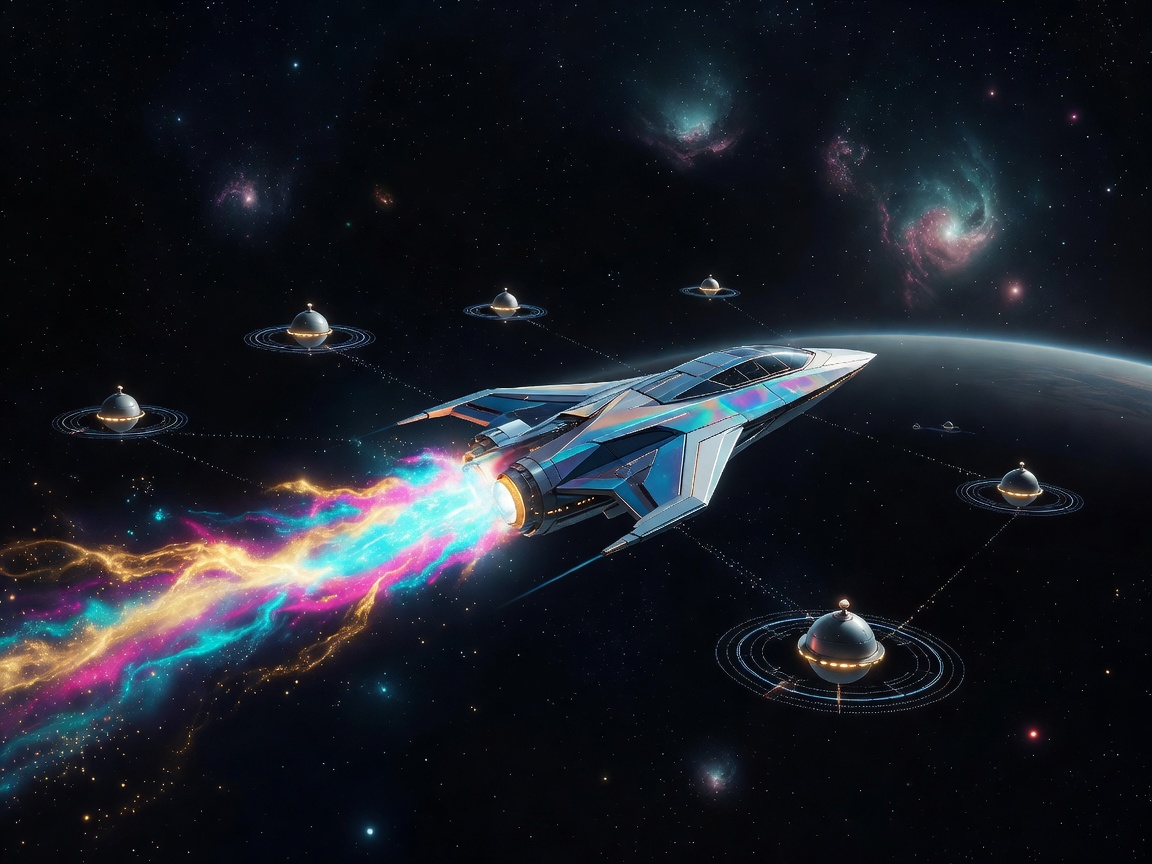
Hard science fiction makes travel expensive in more than fuel. A vehicle carries structure, atmosphere, food, radiators and people through an environment that does not forgive leaks. The best stories let those costs shape politics, pacing and character.
What does propulsion change?
Robert A. Heinlein’s Have Space Suit—Will Travel treats a suit as a life-support system before it treats it as clothing. The distinction matters. A pressure vessel, thermal layer, radio and oxygen reserve determine what a person can do. By contrast, 2001: A Space Odyssey uses relatively restrained spacecraft movement: the Discovery travels with deliberate continuity, while artificial gravity comes from rotation rather than a magical floor.
Neither work is a complete engineering manual. Their value lies in making the vehicle legible. A reader can ask which parts are structural, which are consumable and which are assumptions.
Why do journeys take so long?
Distance creates communication delay, launch windows and social separation. The crew of The Martian cannot simply call Earth and receive an immediate rescue decision. Its plot depends on planning across a delay, and on the fact that a return mission requires an orbital sequence rather than a straight-line chase.
Generational ships push the same issue into culture. Kim Stanley Robinson’s Aurora is useful because it refuses to make a closed ecosystem merely a bigger room. Biology, maintenance and governance become linked. A technical failure can become a political one when there is no nearby outside system.
How should a reader compare spacecraft?
Start with four questions: what provides thrust, where does waste heat go, how is the crew protected from radiation, and what happens when a critical component fails? Then look for the story’s chosen compromise. A chemical rocket offers high thrust but limited efficiency. An electric propulsion system can be efficient while producing low thrust. A generation ship avoids a single human lifetime as the travel unit, but it inherits the harder problem of keeping a society and machine alive together.
Hard science fiction does not need to eliminate wonder. It gives wonder a bill, a timetable and a maintenance schedule.